Team Showcases
Looking for a specific innovation showcase?


Filter
Years
STEM Focuses
Locations
Education Levels
Programs
Showing 1 - 45 of 45 results
Cognitive Liberty in Neurotech: Machine-Washable EEG Prototype

We are developing a type of non-invasive neurotechnology called an EEG (electroencephalogram) using technological advances in neuroscience and nanotechnology.
CalgaryPulse

CalgaryPulse is a living AI simulation of Calgary's economy that lets any citizen click their property to see exactly where their tax dollars go, ask policy questions in plain English and watch the city simulate the answer across 500,000 real properties, and explore AI-powered recommendations for reviving vacant downtown buildings
turning Calgary's 30% office vacancy crisis from an invisible problem into an interactive, solvable one.
OM-Vate: A Platform for Elevating OMV-Based Drug Packaging & Delivery

We are developing a programmable outer membrane vesicle (OMV) loading platform to address major limitations in current OMV biomanufacturing, including low loading yields, poor scalability, and inefficient cargo incorporation. These challenges are especially critical in combating antimicrobial resistance (AMR), where biofilms formed by ESKAPE pathogens prevent effective antimicrobial delivery and accelerate resistance development. Given that the non-specific nature of conventional antibiotic delivery further promotes the development of multi-drug resistant bacteria, improving targeted drug delivery systems is essential in preventing the worsening of AMR.
Our platform leverages OMVs as a natural delivery system capable of penetrating biofilms, protecting therapeutic cargo from degradation, and bypassing porin-mediated resistance mechanisms. Using vesicle nucleating peptide (VNp)-based engineering, we aim to selectively package antimicrobial peptides into OMVs to target ESKAPE pathogens. By creating a scalable and modular OMV delivery platform, our project aims to enable targeted antimicrobial therapies against resistant pathogens while supporting broader applications in therapeutics, vaccines, and biotechnology.
dermadetect

Our project bridges a critical gap in skin cancer prevention by transforming complex UV data into a creative, consumer-facing product: a colour-changing pigment-producing substance tested with bacteria applied to the skin using a model like a henna pen to make monitoring sun damage an intuitive and fun life-saving habit.
Prosthetic Smart Sock
Project90 SOCKS team develops an ultra-thin smart sock with embedded pressure sensors to give prosthetists real-time 3D pressure maps during prosthetic socket fitting. This addresses the #1 patient complaint—poor socket fit—by replacing subjective visual inspections with objective data, potentially cutting clinic visits in half.
Scoliosis Brace Tension Sensor
SpineSense is a project that provides a real-time brace tension sensor for scoliosis patients. Using strain gauges and a companion mobile app, our device integrates directly onto the strap of a scoliosis brace and continuously monitors whether the correct force is being applied, giving patients, parents, and clinicians meaningful data for the first time. We are pursuing pilot testing in partnership with Cascade Orthotics.
Innoskate

Ice rinks are a cultural and recreational cornerstone in Canada, supporting over 800,000 registered skaters, hockey players, and curlers. Maintaining rink surface temperatures between -4 and -8 °C requires energy-intensive refrigeration systems, making these facilities among the largest municipal energy consumers. Statistics indicate that, for each degree increase in surface temperature, approximately 5% of energy consumption can be saved. This study proposes transforming E. coli with modified inaZ genes, native to Pseudomonas syringae, to produce ice-nucleating proteins (INPs) that promote ice formation at higher temperatures. In this study, E. coli will be engineered with two variations of the inaZ gene where the N-terminal domain has been truncated, enabling intracellular protein production. Protein expression of the two variants has been successfully achieved, and ongoing work focuses on increasing protein yield for functional assays. In parallel, molecular dynamics (MD) simulations of INP-water interactions demonstrated the formation of ice lattice structures, with ~600 hydrogen bonds forming over 5 μs. Experimentation on commercial INPs identified a minimum effective nucleation concentration of 0.250 g L⁻¹, capable of inducing ice formation at temperatures as high as -2°C. To evaluate applicability, 3D-printed rink models were developed to simulate rink conditions and assess nucleation efficiency through ongoing functional assays.
Synfera

Synfera is developing a shelf-stable, universally compatible oxygen therapeutic designed to reduce reliance on donated blood. By leveraging synthetic biology and recombinant biomanufacturing, we aim to create a scalable solution that addresses blood shortages, cold-chain limitations, and supply constraints. Our goal is to expand reliable oxygen delivery in emergency, rural, and resource-limited settings.
Synq

Loneliness contributes to over 871,000 deaths annually, while 1.8 billion adults remain insufficiently active, yet social media platforms are engineered to maximize screen time, not real-world connection. Synq is a behavior-designed mobile platform that inverts this model. No feed, no ads, no passive scrolling. Instead of optimizing for attention, Synq optimizes for participation: users discover nearby activity sessions, form friendships through shared action, and document verified Moments that confirm they showed up. Synq does not compete with social media. It reconstructs what social media displaced.
Aptonix

A non-invasive, reusable DNA-based electrochemical biosensor for Alzheimer's Disease biomarkers.
MOSMAGE

MOSMAGE is a fully modular, open-source automated genome engineering hardware platform designed to demolish the financial barriers restricting metabolic engineering innovation. By integrating automated liquid handling, thermal control, electroporation, fluidics, and real-time culture monitoring into an automated and scalable system, OSAGE transforms genome engineering from a slow, manual, and expensive process into an accessible, automated workflow.
The hardware does not simply replicate existing systems at lower cost, it reimagines accessibility through modularity, reconfigurability, and open-source design. By reducing the cost of scientific ambition, MOSMAGE empowers students, startups, and small laboratories to accelerate innovation in the bioeconomy and contribute meaningfully to sustainable manufacturing and global health solutions.
Yankauer Support System

The Yankauer Support System is an eye-controlled assistive device that enables individuals with tetraplegia to independently position a Yankauer suction tool. By combining eye-tracking technology with a mounted mechanical arm, the system allows for precise, hands-free control of suction positioning, improving user independence while maintaining safety through intentional and careful user-centered design.
PetaScale

This project aims to engineer next‑generation, highly efficient, environment‑specific plastic‑degrading enzymes capable of functioning in real‑world industrial and environmental conditions. Plastic pollution is a rapidly escalating global crisis, and current enzymatic solutions (such as PETases) remain too slow, unstable, and limited to ideal laboratory settings to be commercially viable.
By integrating large‑scale sequence resources (ex: the Logan database), advanced machine‑learning models, scalable wet‑lab assays, and deployable hardware systems, this project seeks to overcome the major bottleneck in the field: the lack of high‑quality wet‑lab data and the inability to test enzyme variants at scale. The outcome will be a patentable, full‑stack biodegradation platform with applications across recycling, wastewater treatment, environmental remediation, and sustainable manufacturing.
BioGait Dynamics
Wearable biofeedback sensors are innovative solutions which provide real-time, continuous feedback on gait characteristics to improve rehabilitation. These devices can support individuals post-neurological events which impair proprioception, which allows them to regain their independence by analyzing joint angles and gait-related motion artifacts. Providing real-time feedback can reduce reliance on rehabilitation therapists and allow users to improve their gait, balance and overall mobility.
ReNgal

Acute Kidney Injury, or AKI, is a rapid decline in kidney function that affects hospitalized patients, surgical patients, individuals with infections, and those with chronic conditions such as diabetes. Diagnosis currently relies heavily on serum creatinine, a marker that often rises only after significant kidney damage has already occurred. This delay limits early intervention and contributes to increased mortality, prolonged hospital stays, and long-term complications such as chronic kidney disease.
ReNgal is Chimera’s electrochemical lateral flow NGAL biosensor designed to detect AKI earlier by targeting Neutrophil Gelatinase Associated Lipocalin (NGAL), an established early biomarker that rises hours before creatinine following kidney injury. By combining antibody-based NGAL capture and detection with an enzymatic electrochemical readout, ReNgal provides a rapid, portable, and clinically accessible method for early kidney injury detection.
Our project focuses on reducing diagnostic turnaround time while maintaining clinical reliability. The lateral flow format allows ease of use, while the electrochemical component enhances sensitivity compared to traditional visual test strips. This makes ReNgal suitable for emergency departments, intensive care units, and potentially outpatient monitoring settings.
To validate our device, we are collaborating to obtain clinical samples through MDS, enabling us to test real patient specimens and compare NGAL measurements against existing creatinine-based diagnostics. Our validation plan includes sensitivity and specificity analysis, calibration curve optimization, and benchmarking against current laboratory standards.
The long-term vision for ReNgal is scalable deployment within hospital systems to enable earlier clinical decision making, reduce progression to chronic kidney disease, and lower healthcare burden. By integrating biomarker science, electrochemical sensing, and accessible design, ReNgal aims to shift AKI detection from reactive to preventive.
ReNgal is not just a diagnostic device. It is a step toward giving clinicians time to act, and patients a better chance at recovery.
Project 90 - Swim Bench
Our team is designing is an adaptive sports training device designed to support a Special Olympics athlete with cerebral palsy in improving her swim technique and strength outside of the water. The bench creates an accessible, land-based training environment that allows for focused stroke development, resistance training, and measurable performance tracking, helping bridge the gap between ability and opportunity in competitive swimming.
Beyond swimming, the bench has broader applications as an inclusive fitness device for individuals with limited mobility, stroke survivors, and others undergoing rehabilitation. By providing supported positioning, adjustable resistance, and customizable incline, the bench enables safe, strength-based and cardiovascular training for users who may not have access to traditional gym equipment.
Mirra Call - the smarter mirror for self-care rehab

Our project is a smart mirror designed to empower seniors to maintain independence through guided self-care. The mirror integrates intelligent prompts, verbal encouragement, and visual guidance to assist older adults with daily grooming and hygiene and self-care tasks. By combining a familiar tool with intuitive technology, the system supports autonomy, dignity, and confidence without feeling overly clinical or intrusive.
Our smarter mirror transforms an everyday object into an accessible health companion, helping seniors complete routines such as brushing teeth, washing their face, shaving, or brushing their hair. The goal is provide caregivers relief, while enhancing agency, reducing dependence and promoting well-being safely.
3D Printed Smart Composting System

Food waste is a major global problem. Around 30% of all food produced is wasted, and when it goes to landfills, it decomposes without oxygen and produces methane — a greenhouse gas much stronger than carbon dioxide.
Although composting is a solution, traditional composting often fails because:
Temperature is not monitored
Carbon and nitrogen balance is incorrect
Poor aeration causes odor
Users do not know if it is working
Our solution is a 3D Printed Smart Composting System that makes composting controlled and data-driven.
The system includes:
A double-wall insulated 3D printed compost container
An Arduino temperature sensor
A mobile app dashboard for real-time monitoring
By maintaining the optimal temperature range of 45–65°C, the system ensures efficient microbial activity, faster decomposition, reduced odor, and better compost quality.
We will prototype, test, and compare it with traditional compost bins, measuring temperature stability, compost maturity time, and performance.
This solution can be used in homes, schools, and communities.
It reduces methane emissions, supports sustainable living, and integrates biology, engineering, and technology into one practical system.
TerraScan Mini
The TerraScan Mini is an autonomous survey drone designed to survey large areas of land without human piloting.
LacThera

LacThera is an innovative, prevention-focused probiotic designed to address the global burden of recurrent urinary tract infections (rUTIs). Unlike conventional antibiotic treatments that only resolve active infections, LacThera works to restore and protect the vaginal microbiome following treatment. Built on the native protective bacterium Lactobacillus crispatus, LacThera utilizes a non-GMO surface display system to inhibit pathogen adhesion and reduce reinfection risk. Delivered through a targeted hydrogel suppository, the platform is designed to improve bacterial retention, enhance colonization, and support long-term microbial balance. By shifting the focus from repeated treatment to sustainable prevention, LacThera aims to reduce recurrence rates, limit antibiotic overuse, and improve women’s health outcomes globally.
RecycleX

RecycleX is a community-focused recycling platform that makes recycling easy, rewarding, accessible for everyone, and supports a greener Regina.
Project90 Hip Abductor
The Project90 Hip Abductor is a Project90 initiative in which we are collaborating with PONI labs at Alberta Children's hospital and Ability workshops to create a way for children affected by cerebral palsy to develop their physicality and independence.
Nulfur
Heavy sour crude oil is becoming harder and more expensive to process, while fuel standards continue to demand lower sulfur content. Today, refineries rely on hydrodesulfurization, a high-heat, high-pressure process that consumes hydrogen gas and requires heavy industrial infrastructure. iGEM uOttawa is exploring whether engineered biology can offer a cleaner, lower-resource alternative. Our project uses biodesulfurization to investigate how bacteria could help remove sulfur from crude oil under milder conditions, with the long-term goal of developing a biological unit operation that supports cleaner fuel processing during the transition toward more sustainable energy systems.
Bark Watch
Global reforestation efforts face significant challenges, with nearly half of replanted seedlings dying within five years and remote-sensing tools such as drones and satellites unable to capture early-stage growth beneath dense forest canopies. To address this critical data gap, our team designed a cost-effective quadruped robot capable of collecting high-resolution ground-level forest data while navigating complex terrain alongside silviculture workers.
Aquilux Flow

Aquilux Flow is a modular, low-energy water purification system designed to improve access to clean drinking water in remote and Indigenous communities. The system removes contaminants by combining reusable filtration, electrostatic separation, and vapor-based purification. Water is heated to produce vapor, which leaves heavy metals, sediments, and pathogens behind before condensing into clean water in a sealed chamber.
ChassisCraft

ChassisCraft aim to develop an optimized E. coli chassis (OEC) for the efficient biosynthesis of natural-derived products that are 1) difficult to synthesize chemically or 2) are prohibitively expensive to isolate from natural sources. This engineered strain will have optimized metabolic and regulatory features that can be readily adapted for multiple applications for natural-derived product synthesis.
Oat Shield

Our project aims to create sustainable, ethical and cost effective wound bandaging by combining agricultural waste with antimicrobial peptides and synthetic biology.
Lumifert

Lumifert is an environmentally sustainable duckweed-based bioengineered fertilizer which can be customized to meet the nutritional needs of specific crops and regions. The duckweed is grown in an automated hydroponic system that optimizes growth, controls nutrient content, and can be scaled to meet the needs of the smallest and largest farms.
BEE WISE-HVMS — Bee Wise Hive Ventilation & Monitoring System
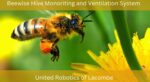
The BEE WISE students are building a smart beehive system where hive monitoring systems securely connect to an app, that are easy to set up and manage by the user, and can automatically open or close vents to keep bees healthy based on real-time hive temperature, humidity and carbon dioxide levels.
Beewise Hive
We will improve our hive monitor system, tracking temperature, humidity, and CO2. Partnering with Gull Lake Honey, we’ll refine the design, test in winter, and develop an app for real-time data.
LacThera
The idea behind our project is to use a probiotic bacteria to help maintain balance of healthy bacteria in vaginal area.
AquaAlert Biobot: Bio-Based Metal Detection

BioBot is a solar-powered floating device that detects heavy metals in water using genetically engineered bacteria, providing real-time contamination alerts to ensure safe drinking water & environment
NutriX

This project is an AI-powered meal planning app designed to help users address nutrient deficiencies while maintaining their cultural food preferences.
MicroRem
To decontaminate the toxic chemicals in soil and groundwater at the Chalk River Nuclear Site we propose to use a three layer in situ bioremediation system called MicroRem.
Adaptive Kneeling Frame Project

The Adaptive Kneeling Frame is a custom mobility aid for children with cerebral palsy and arthrogryposis. It enhances therapy by enabling weight-bearing on knees and arms, improving posture, strength,
ARBO
A long-lasting topical solution that activates the skin’s natural bacteria to repel mosquitoes for up to 12 days, offering safe, eco-friendly protection for outdoor enthusiasts and high-risk areas.
Innoskate

Innoskate redefines ice rink maintenance by engineering E. coli to secrete ice-nucleating proteins, raising the freezing temperature of ice and decreasing the energy required for refrigeration.
RhizoRetention

We will improve canola's drought tolerance, by using engineered Arthrobacter globiformis to deliver siRNA targeting bHLH61, a gene shown to increase drought resilience in plants like Arabidopsis.
Hyaluronext
From crosslinks to breakthroughs: revolutionizing hyaluronic acid synthesis using synthetic biology.
AptaMod
AptaMod is a nanoscale biosensor that detects biomarkers of neurodegenerative diseases, such as Alzheimer's, to support earlier intervention to improve prognosis.
Chimera Biofuels
This team is investigating the use of naphthenic acid degrading algae to convert environmental toxins from the Alberta oil sands into a renewable biofuel source, cleaning our local waters!
Algae Tech

This team is examining fabrics, textiles, and paints made from or embedded with algae, photosynthetic microbes that convert carbon dioxide to oxygen and are easily grown.
Carbon Replay

Carbon Replay is revolutionizing sustainable materials with its proposed network of small modular bioreactors (SMbRs), which produce high-value, carbon-sequestering PLA bioplastic composites.
NanoGuide

By capping a porous nanoparticle with RNA, we can attach a protein in a way that when a target RNA is present, the protein will cut the cap and release a cargo. This serves as a Bird Flu RNA sensor.
RENEWOOL

ReneWool is a genetic engineering product which utilizes enzymatic degradation to upcycle mixed fabric waste into spider silk in E. coli.